Mario Merz
Biography
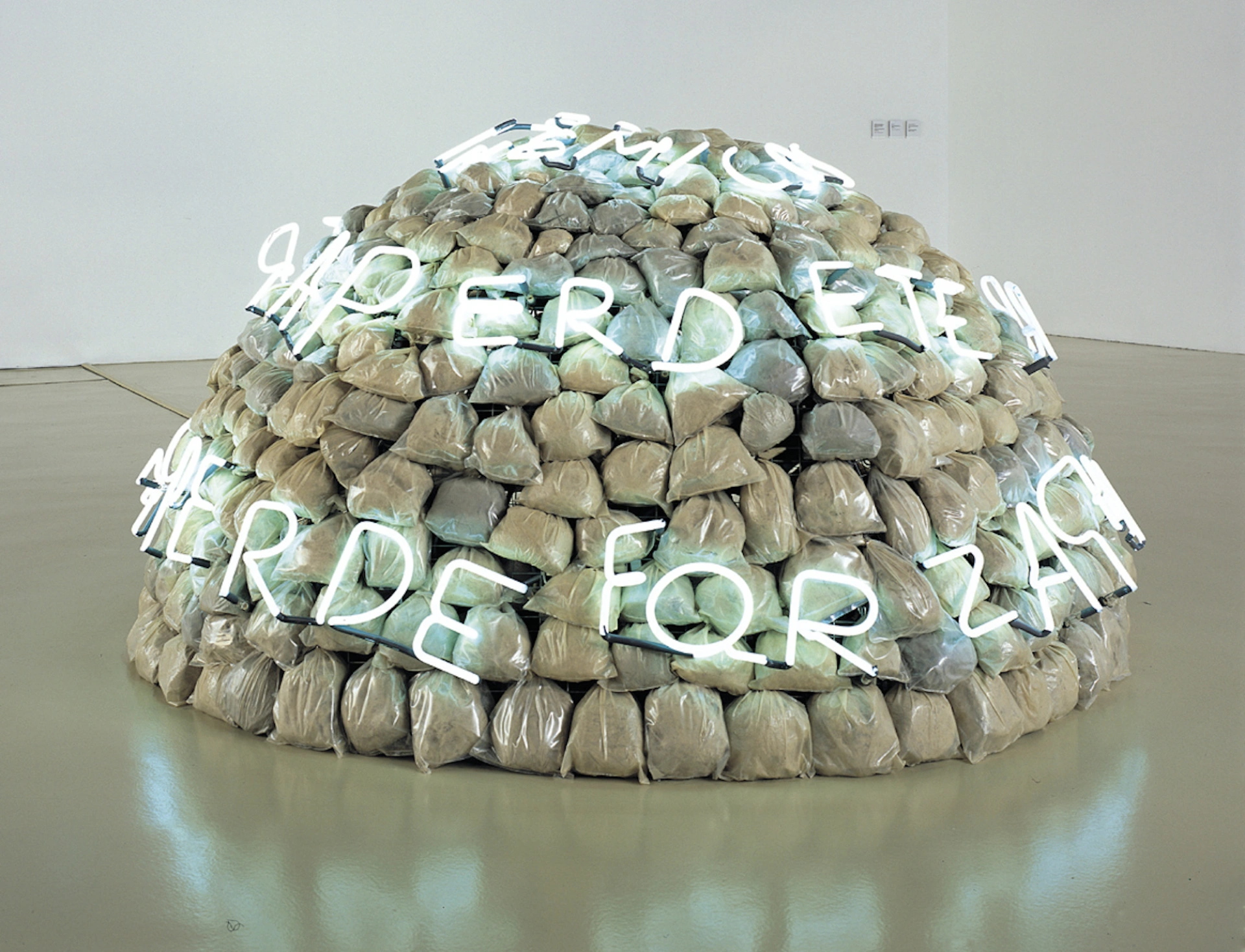
Mario Merz (1925–2003) è stato uno dei principali esponenti dell’Arte Povera, movimento artistico italiano nato alla fine degli anni Sessanta. Nato a Milano e cresciuto a Torino, iniziò la sua attività artistica negli anni Cinquanta. Divenne celebre per l’uso di materiali poveri e naturali come legno, cera, vetro, terra e metallo, combinati spesso con tubi al neon. Tra i suoi temi ricorrenti spiccano la serie di Fibonacci, il concetto di energia vitale, il tempo e la natura, espressi soprattutto attraverso la forma dell’igloo, divenuta una delle sue immagini simbolo. Le sue opere sono state esposte nei più importanti musei e rassegne internazionali, contribuendo in modo decisivo alla diffusione dell’Arte Povera nel mondo.
Mario Merz - Poor Art
Art Poor is the name that Germano Celant attributed, in the mid-1960s, to the production of a group of artists such as Alighiero Boetti, Mario Merz, Giulio Paolini, Jannis Kounellis, Gilberto Zorio, Michelangelo Pistoletto, and others, to whom later piero Gilardi also joined. It distinguishes, these artists, the use of techniques and unconventional supports, such as earth, iron, rags, industrial waste, etc., materials precisely poor gives the name of Poor Art . Materials that are in common use and therefore, in the intentions of the authors, a trace to the original structures of language, a reduction to the minimum terms, an impoverishment the pictorial sign to the point of going back to its archetype. Peculiarity of these artists is also the frequent use of the installation or that of the use of live animals. Celebri remains Pistoletto's "Virgin of rags" and Kounellis' "Untitled (12 horses)"